Clarity and a voice
People get an honest answer, useful alternatives and a way to ask for Tabby where they already shop.
A clearer end to every store search
When someone searches for a store that is not on Tabby, the app should give them a clear answer, let them request the store, and notify them if it becomes available.

Would you like to see Tabby available here? Your request helps us understand which stores matter most.
A person searching a specific merchant has a direct question: “Can I use Tabby here?” When there is no exact match, the current experience fills the screen without answering it.
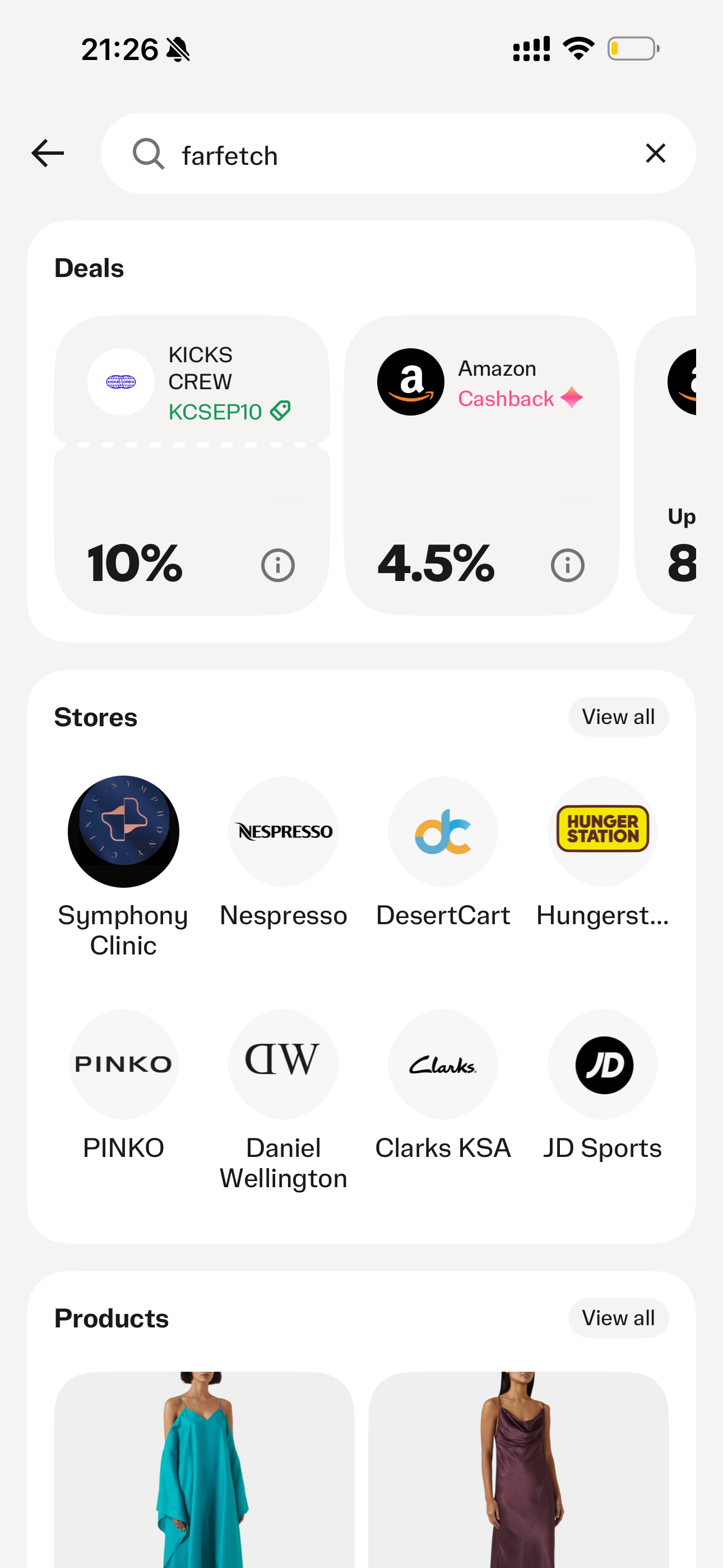
Real Tabby search in Saudi Arabia, 29 September 2026.
The interface does not say whether the merchant is unavailable, misspelled or simply missing from the result.
Other stores and products appear, but they are not labelled as alternatives. This makes the results feel unrelated.
The search reveals demand for a missing merchant, but the shopper has no way to express their preference or follow it.
The first version can fit naturally inside Tabby’s existing store search. It requires one clear state, one action and one meaningful follow-up.
Recognise when the searched merchant is not available in the shopper’s country.
State that the store is not currently on Tabby before showing relevant alternatives.
Let the shopper register interest with one tap. An optional question can capture purchase intent.
Notify the shopper if the merchant becomes available, turning past interest into a future visit.
People get an honest answer, useful alternatives and a way to ask for Tabby where they already shop.
Searches become country-specific merchant signals that can help prioritise partnerships and product listings.
Prospective partners can see that existing shoppers actively prefer Tabby, based on real behaviour rather than a general survey.
The first test should compare the new state with today’s search experience for people who enter a merchant with no exact result.
The confirmation should say that Tabby has recorded the request without implying that a partnership is underway.
Merchant decisions involve commercial, regulatory and technical factors. This feature helps prioritise conversations rather than replacing them.
“I already choose Tabby whenever I can. I want a way to bring that preference to more of the places I shop.”
A real shopper insight behind Request a Store